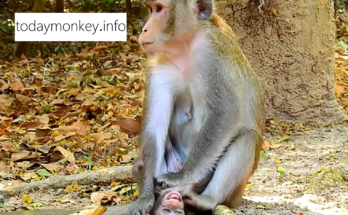
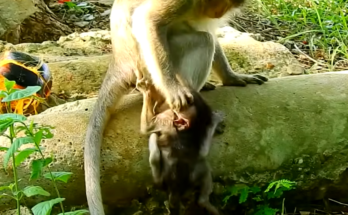
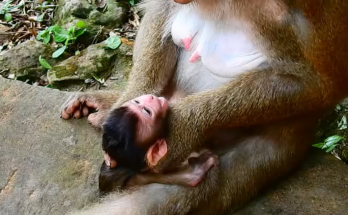
Deep inside the emerald rainforest, where morning sunlight slipped gently through towering trees, a tiny baby monkey named Luno opened his curious eyes for the very first time. His soft cries echoed through the jungle while his loving mother wrapped her warm arms tightly around him, protecting him from the giant world surrounding them.
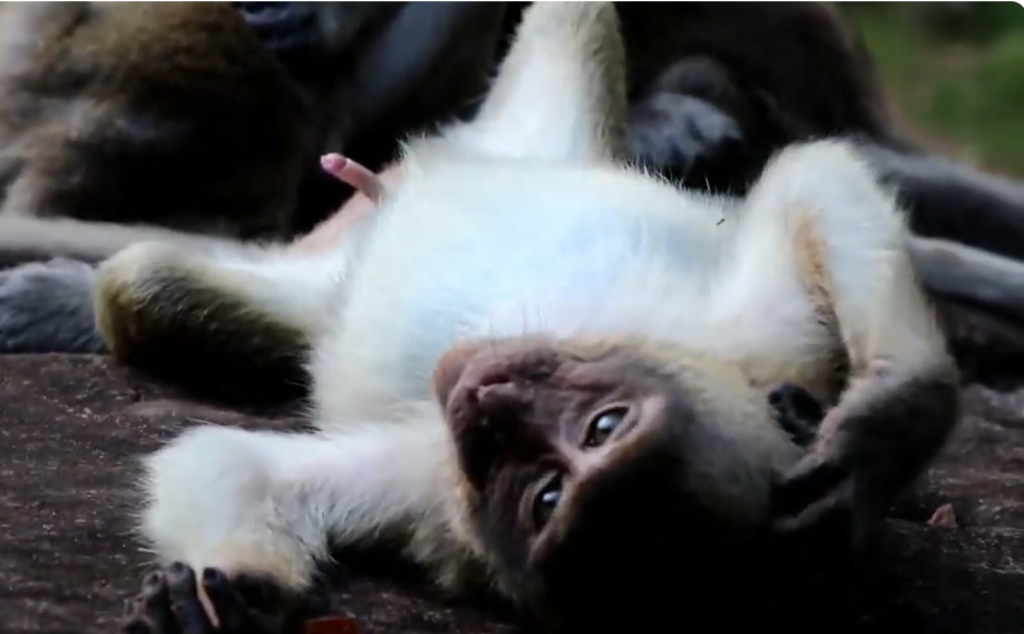
Every day in the forest became a new adventure for little Luno. He clung carefully to his mother’s fur as she leaped between branches high above the jungle floor. The sounds of colorful birds, rushing waterfalls, and distant animal calls filled the air while the monkey family searched for sweet fruits and fresh leaves together. Monkey communities are known for strong social bonds and protective parenting behaviors, especially between mothers and infants.
As weeks passed, Luno slowly became braver. He started exploring nearby branches with playful excitement, sometimes slipping clumsily before his mother quickly reached out to pull him back safely. Older monkeys in the troop watched closely, grooming one another and helping care for younger babies. Scientists have observed that many monkey species live in close social groups where bonding, grooming, and infant protection are important parts of daily life.
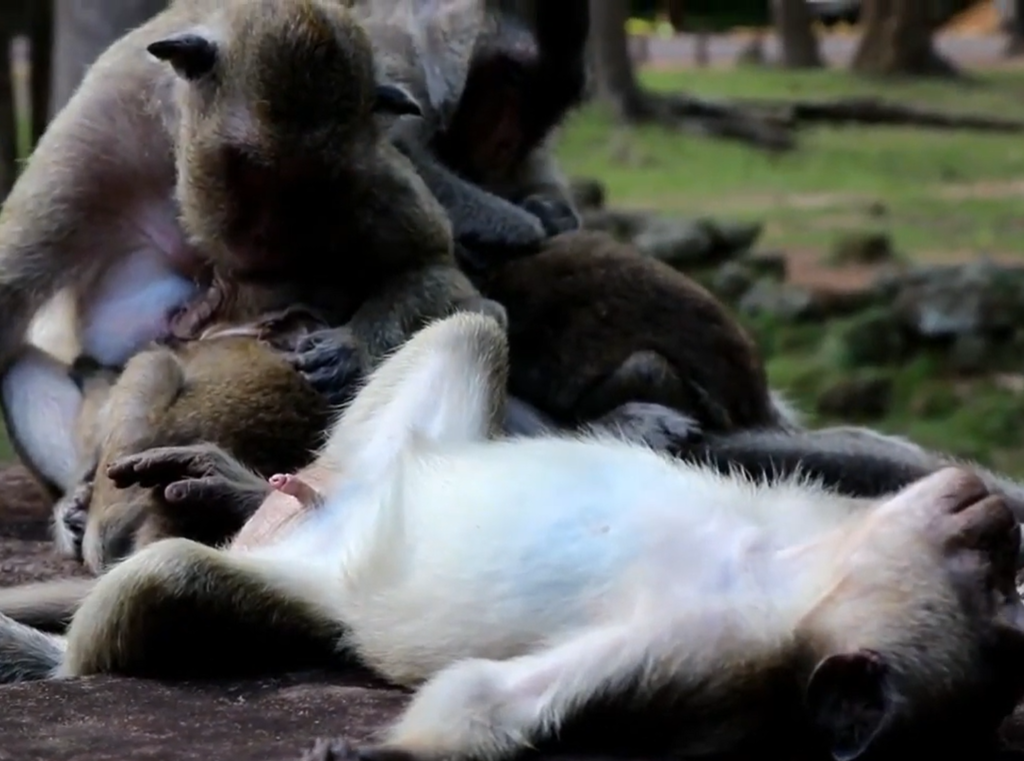
One quiet afternoon, dark clouds suddenly rolled across the sky. Heavy rain poured through the forest, and strong winds shook the trees violently. Tiny Luno trembled in fear as thunder crashed overhead. His mother held him tightly against her chest, carefully shielding him beneath giant leaves while the troop gathered together for safety. In that emotional moment, the little monkey realized that family meant protection, comfort, and unconditional love.
When the storm finally passed, golden sunlight returned to the rainforest. Water droplets sparkled like diamonds across the leaves while Luno and the other baby monkeys began jumping playfully through puddles. The older monkeys watched carefully from nearby branches, making soft calls to keep the young ones close. Researchers have documented that monkeys use complex vocal communication and social signals to maintain strong group connections in the wild.
As seasons changed, Luno grew stronger and more independent. He learned how to climb higher trees, recognize safe foods, and communicate with his troop using playful sounds and expressions. Yet no matter how adventurous he became, he always returned to his mother at sunset, curling safely beside her while the jungle slowly drifted into darkness.
Visitors who secretly observed the monkey family from afar often felt deeply emotional watching their tender interactions. Many people online describe monkey parenting moments as surprisingly relatable, filled with affection, patience, and protection that remind viewers of human family bonds.
In the heart of the wild rainforest, where danger and beauty exist side by side, little Luno’s story became a touching reminder that love, family, and survival connect every living creature in nature.