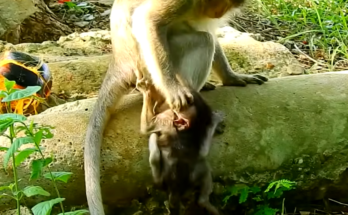
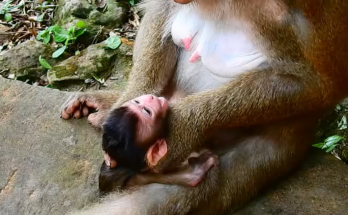
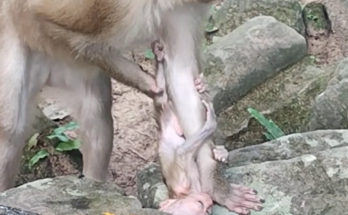
Deep in the peaceful forest, a tiny baby monkey faced one of the biggest changes of its young life. The little one stayed close to its mother from sunrise until sunset, following her every movement as if afraid to be left behind. Although surrounded by the beauty of nature, the baby seemed unusually quiet and uncertain.
Wildlife observers noticed that the young monkey repeatedly reached toward its mother for comfort. This behavior is common during the weaning period—a natural stage when a mother gradually encourages her baby to become more independent. For a young monkey, this transition can be confusing. It is learning that growing up means relying less on mother’s milk and becoming more interested in exploring solid foods and the world around it.
Several times, the baby gently climbed onto its mother’s back, wrapped its tiny arms around her, and rested its head against her shoulder. The mother remained calm and patient. Even when she encouraged independence, she never wandered far from her little one. She continued grooming the baby, watching for danger, and offering reassurance whenever the youngster became anxious.
As the hours passed, the baby slowly began to explore nearby branches. It picked at leaves, examined small fruits, and carefully copied the older monkeys in the troop. Yet every few minutes, it hurried back to its mother, seeking the safety that only she could provide.
Watching this touching scene reminded everyone that growing up is never easy. Whether in the animal kingdom or among people, the journey toward independence often comes with uncertainty. The bond between a mother and her child remains incredibly strong, even as each new step leads toward a more independent future.
The gentle interaction between this mother and her baby highlights the remarkable care found in nature. Rather than forcing separation, the mother allowed the process to happen gradually, giving her young one the confidence needed to face the world. It was a quiet lesson in patience, trust, and unconditional care.
By the end of the day, the baby monkey appeared a little more confident than before. It still stayed close to its mother, but each small adventure away from her lasted just a little longer. Those tiny moments marked important milestones in its development.
Scenes like this remind us why wildlife deserves our respect and protection. Every young animal depends on a safe natural habitat where it can learn, grow, and develop the skills needed to survive. Preserving forests helps ensure that future generations of monkeys can continue these remarkable life journeys.
Sometimes, the most powerful stories in nature are not about dramatic rescues or dangerous encounters. Instead, they are found in quiet moments—a frightened baby seeking comfort, a patient mother offering guidance, and the enduring bond that helps the next generation grow stronger every day.