
Frail Baby Macaque Clings to Mother’s Back in Raw Footage
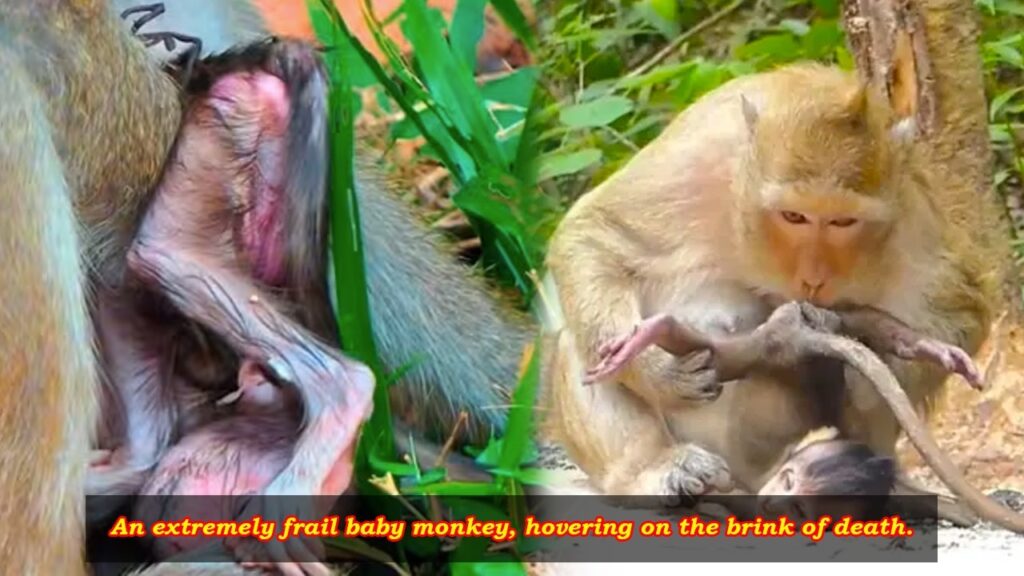
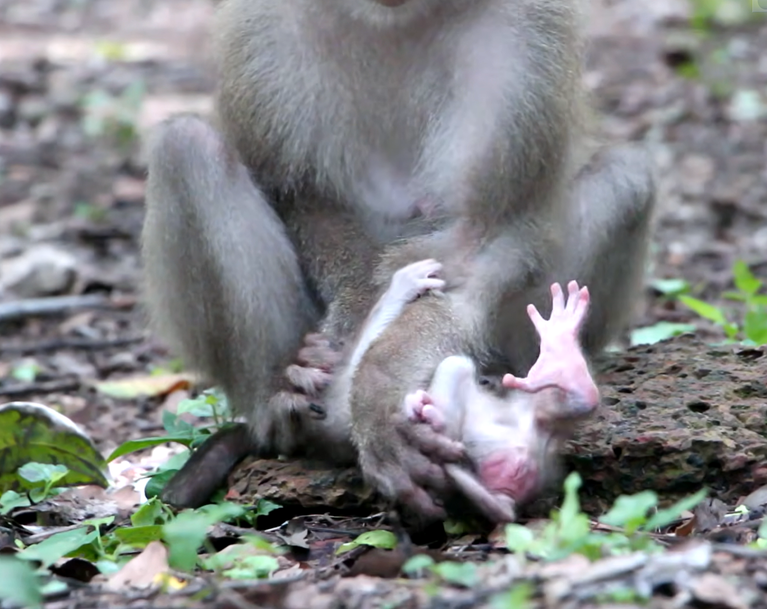
A baby macaque, visibly weak and underweight, is shown clinging to its mother’s back and belly throughout this footage as she moves through low grass and forest undergrowth. The infant’s skin looks raw and patchy in places, its movements slow, and at several points it lies still while the mother holds or grooms it. This report describes exactly what the video shows, scene by scene, based on the footage itself.
What does the footage show happening to the baby monkey?
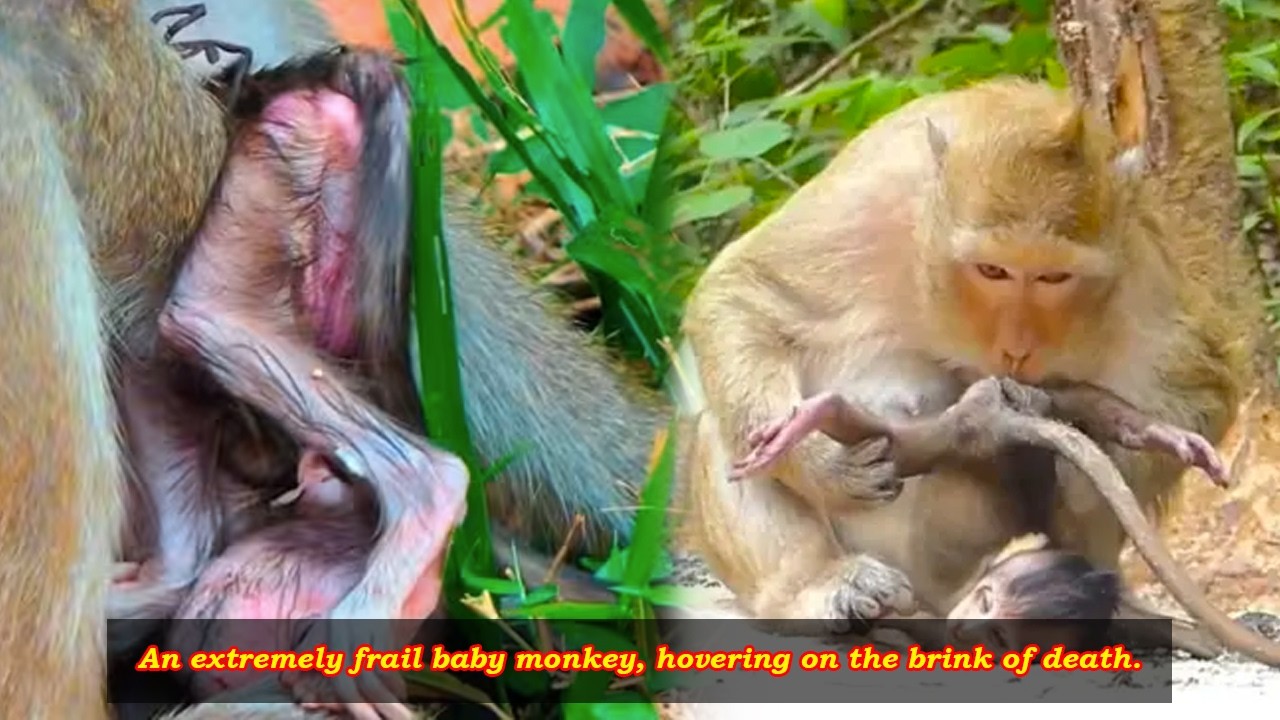
The opening shots show the infant pressed against an adult’s body, its thin arms and legs visible against pink, thinly furred skin. Compared to a healthy young macaque, this baby appears noticeably smaller and frailer, roughly the size that would fit in two cupped hands. Its posture is limp rather than the alert, grasping cling seen in stronger infants.
In one scene filmed on a patch of grass littered with red leaves, an adult macaque sits with the baby tucked against her stomach while pieces of food, what looks like fruit rind, lie scattered nearby. The mother appears to eat while keeping the infant close, occasionally shifting position as the baby stays pressed to her body.
How does the mother macaque respond to the baby’s condition?
Later footage, filmed near the base of a tree, shows the mother sitting upright with her face raised while another young macaque climbs and moves nearby. The baby in question is held low against her, partly hidden by her arms and fur, as she remains largely still, watching her surroundings rather than actively foraging.
A further scene shows the infant lying on bare, dry ground scattered with straw-like plant matter, its body curled and its skin appearing damp and reddened in patches. Its eyes are open but its posture is passive. An adult’s arms and legs surround it in this shot, suggesting the mother is positioned close by rather than the baby being left alone.
What does the setting look like?
Throughout the footage, the setting is a green, forested area with patches of open grass, fallen red leaves, exposed tree roots, and areas of bare dirt. No people, buildings, or man-made structures appear in any of the scenes described here. The lighting is bright and consistent with daytime, natural outdoor conditions typical of the tropical habitat where long-tailed macaques are commonly filmed.
No narration in the footage states a diagnosis, age, or outcome for the infant beyond what is visible: a small macaque baby that appears weak, carried and tended to by an adult female believed to be its mother, moving between resting, being held, and lying on the ground as she stays close by.
You may also like
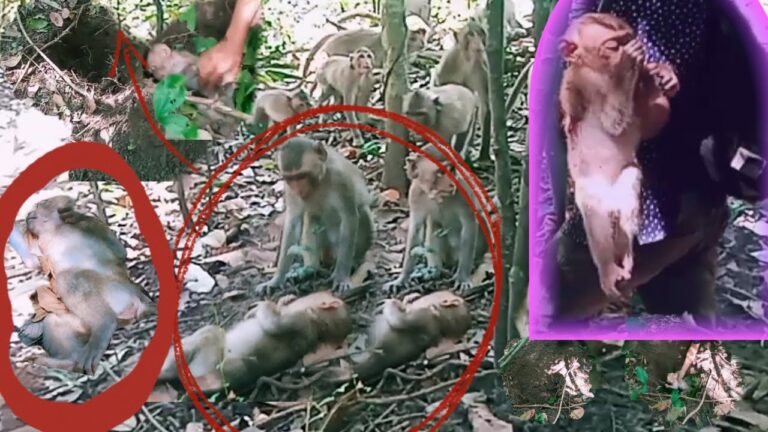
A Forest Troop Gathers Around a Fallen Baby Macaque
A quiet day of feeding turns somber as a macaque troop gathers in the forest around a baby that did…
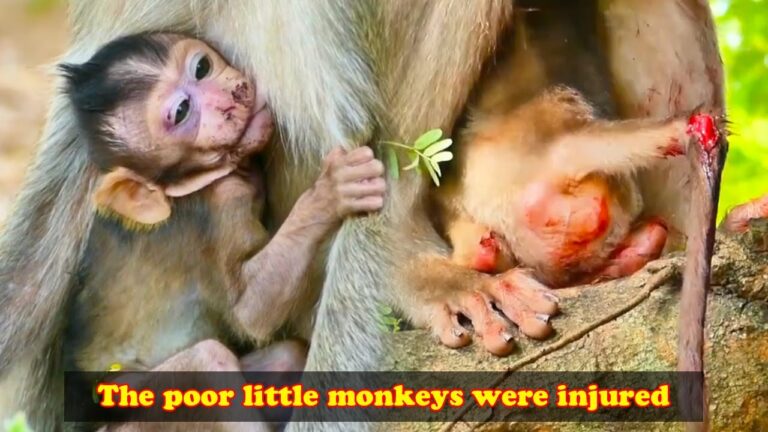
Injured Baby Macaques Cling to Mom in the Forest
Raw footage from the forest shows a pair of baby macaques with visible wounds, staying close to their mothers as…
A Young Mother Learns to Care for Her Newborn Monkey
A newborn monkey’s first days are filled with tiny discoveries, unfamiliar sounds, and the comforting presence of a mother. For…