
A Two-Week-Old Macaque Learns to Move on His Own
A newborn macaque, only two weeks old, is shown pushing himself up onto four small limbs and taking shaky steps across bare dirt, with his mother close by but no longer holding him constantly. That shift — from being carried everywhere to being set down and left to shuffle a few feet on his own — is the heart of this footage.
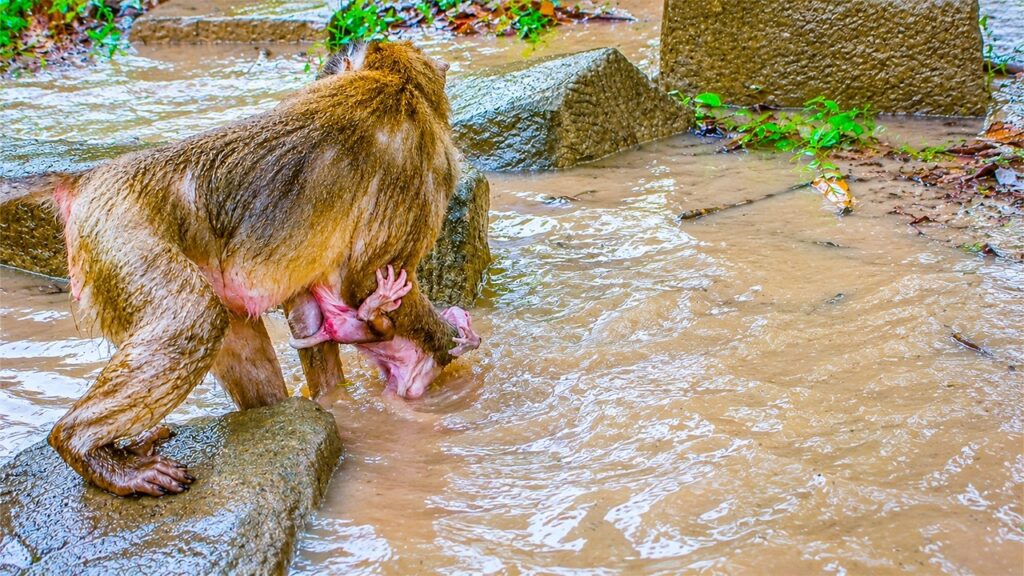
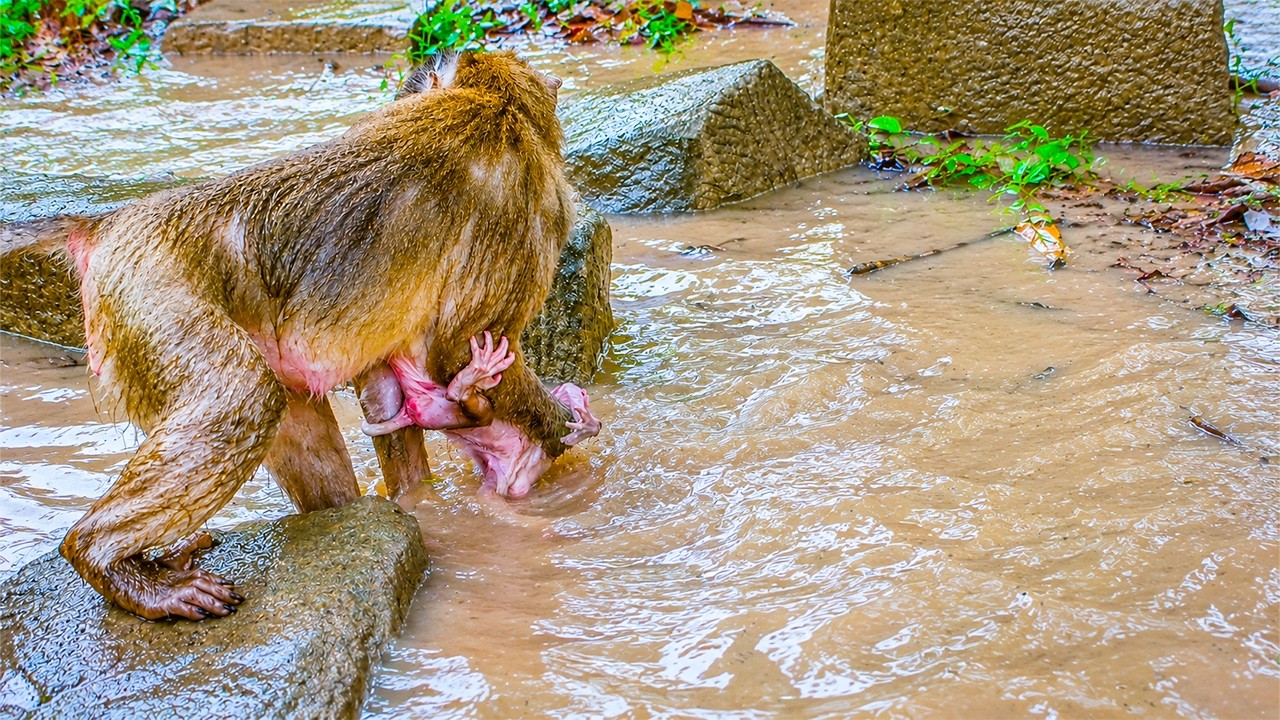
Earlier in the video, the mother is seen in muddy water near some worn stone blocks, gently cleaning her baby. His skin still shows the raw pink color of a newborn, and his fur is thin and damp. She holds him firmly by the hands as the current runs past them, a quiet, careful moment before the independence that follows.
What does a two-week-old macaque look like?
At this age the baby’s face is pale, almost white around the muzzle, with dark patches around wide, unfocused-looking eyes. His coat is a light cream color, still growing in, and his limbs look disproportionately long for his small body — about the size of a house cat, though far less coordinated. He moves in short, uneven bursts, planting his pink hands flat on the ground for balance.
Why would a mother leave her baby on the ground?
In several shots the baby sits alone on dry leaves and patches of green grass, blinking and looking around without his mother in the frame. Later, an adult’s leg and tail appear at the edge of the shot, suggesting she has not gone far. This kind of brief separation is often part of how young primates are encouraged to test their own balance and grip before they are ready to climb or forage independently.
A fragile start
Nothing here is dramatic — no danger, no distress call — just a very young animal figuring out how his own legs work, one wobbly push-up at a time, while his mother stays within reach.
You may also like
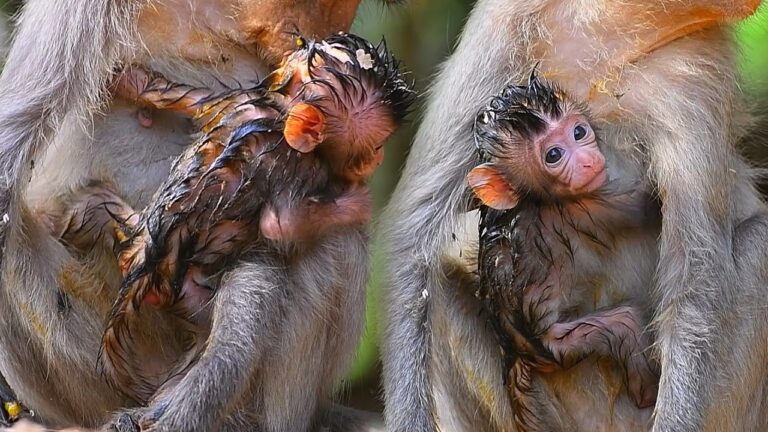
A Young Mother Macaque Cradles Her Newborn in the Forest
A young mother macaque keeps her newborn tucked close through the forest, its fur still damp and its wide eyes…
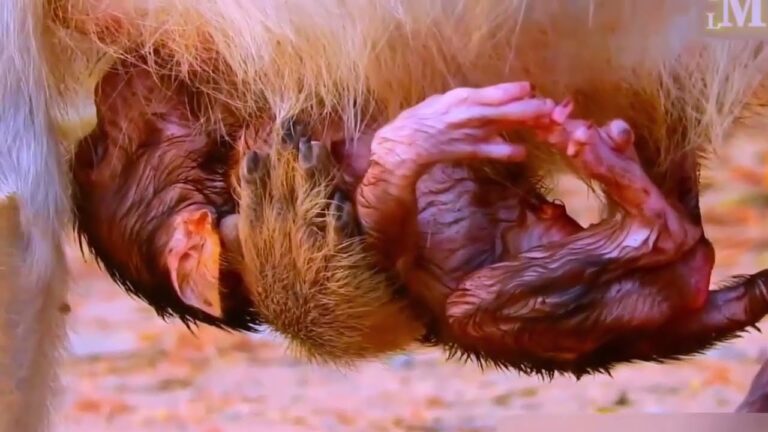
Newborn Macaque Clings to Mom Moments After Birth
A newborn macaque, still damp and wrinkled from birth, clutches its mother's fur as she tries to help it find…
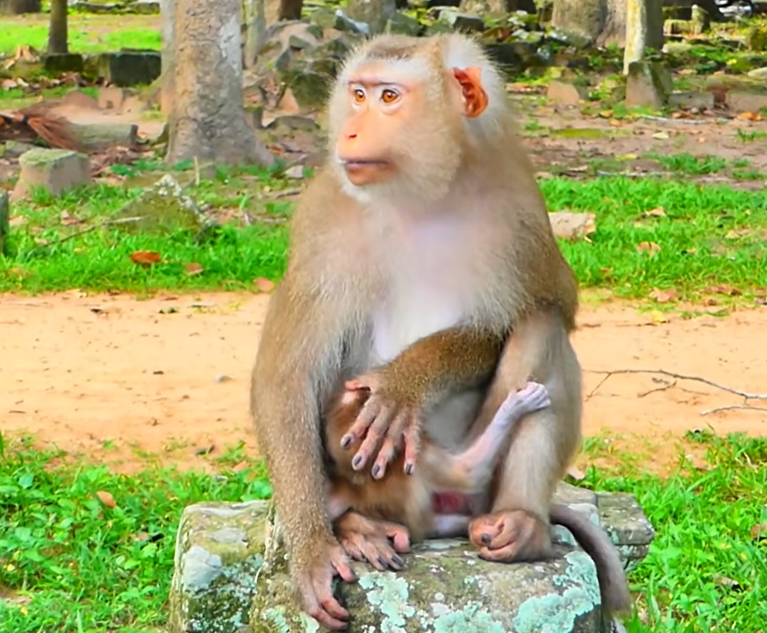
Mother’s Big Hands Gently Hold Her Tiny Baby Monkey
There are some wildlife moments that are impossible to watch without stopping for a second. This is one of those…