Deep in the quiet green forest, far away from the noise and rush of busy cities, there is a small group of monkeys living a life many people would never expect to envy. No luxury, no technology, no perfect comfort—yet somehow, they seem happier than most.
Every morning begins the same way. As the first golden rays of sunlight filter through the trees, the monkeys slowly wake up. Tiny hands stretch, sleepy eyes blink open, and within moments, the forest fills with soft chirps and playful energy. There are no alarms, no stress, no pressure—just the rhythm of nature guiding them into a new day.
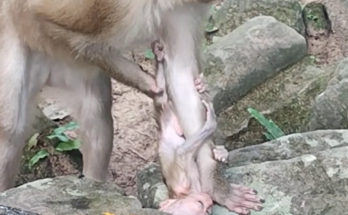
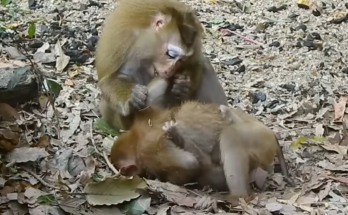
A young baby monkey clings tightly to his mother’s chest, his small fingers wrapped around her fur. He doesn’t worry about tomorrow or regret yesterday. His entire world exists in that moment—safe, warm, and full of love. His mother gently grooms him, her careful movements showing a quiet, powerful kind of care that needs no words.
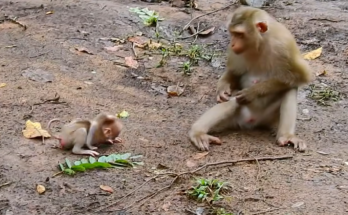
Nearby, a group of older monkeys leap from branch to branch, chasing each other in what looks like an endless game. There’s no prize, no competition—just pure joy. They fall, they miss, they try again. And every time, they seem to laugh it off, never holding onto failure for more than a second.
Watching them, it raises a simple but powerful question: Who would choose this kind of life?
At first glance, it may seem like a life of struggle. Food is not guaranteed. Rain comes without warning. Danger is always near. There are no soft beds or easy solutions. But look closer, and something surprising appears.
They are present.
When they eat, they enjoy every bite. When they play, they give it everything. When they rest, they truly relax. There is no pretending, no comparison, no endless desire for more. What they have is enough—and that “enough” seems to bring a kind of happiness many people spend their whole lives chasing.
One afternoon, something small but meaningful happens. The baby monkey tries to climb on his own for the first time. He struggles, slips, and lets out a tiny cry. For a moment, it feels like failure. But his mother doesn’t rush in immediately. She watches—calm, patient.
He tries again.
And this time, he makes it just a little higher.
That small success sparks excitement. The nearby monkeys notice, gathering around with curious eyes. There’s no jealousy, no judgment—just shared joy. In that moment, the baby monkey isn’t just learning to climb. He’s learning confidence, resilience, and independence.
It’s a reminder of something many people forget: happiness isn’t always found in comfort. Sometimes, it grows from challenge, connection, and simple moments.
As the day slowly fades, the forest softens into evening. The monkeys gather together, their energy calming as they settle into rest. The baby monkey curls up again against his mother, safe and content after a full day of discovery.
No one is checking a phone. No one is worrying about what others think. No one is chasing something they don’t already have.
They simply exist—and in that existence, they seem truly free.
So again, the question lingers: Who would choose this simple life?
Maybe more people would… if they understood what it really offers.
Because hidden within this quiet forest, these joyful monkeys reveal a truth that’s easy to overlook: happiness doesn’t always come from having more.
Sometimes, it comes from needing less—and appreciating what’s already right in front of you.