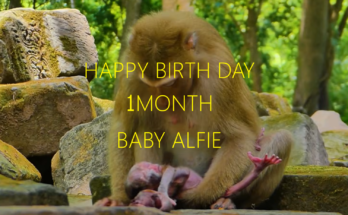
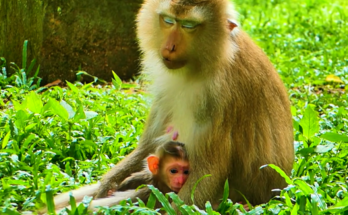
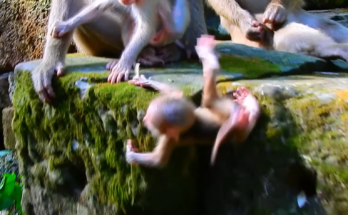
High above the forest floor, where a single misstep can mean the difference between life and death, a heart-stopping moment unfolds. A tiny baby monkey clings desperately to a thin branch, its fragile body swaying with every gust of wind. Below, the ground waits unforgivingly. And just a few feet away sits the one figure you’d expect to rush in without hesitation—the mother. But instead of reacting, she does something that leaves viewers stunned: she watches… and does nothing.
This shocking scene has sparked intense reactions across the United States, where audiences are both captivated and disturbed by what appears to be a mother ignoring her baby in immediate danger. The infant, barely strong enough to hold on, dangles precariously, its grip slipping inch by inch. Every second feels like an eternity. You can almost feel the collective gasp of those witnessing it, hearts racing, silently pleading for the mother to act.
But she doesn’t. Not right away.
To human eyes, this moment feels unthinkable. In American culture especially, parental instinct is often seen as automatic—an unbreakable bond that compels immediate protection. So when that expectation is challenged, it creates a powerful emotional reaction. Is this neglect? Is it indifference? Or is there something deeper happening that we don’t fully understand?
Wildlife experts suggest that what looks like cold detachment may actually be part of a harsh but necessary lesson in survival. In the wild, young animals must quickly learn how to navigate danger on their own. Intervening too soon could prevent them from developing the instincts they need to survive in a world where threats are constant and unforgiving. Still, knowing that doesn’t make the moment any easier to watch.
The baby continues to struggle, its tiny limbs trembling under the strain. The branch bends. The risk is real. Viewers across social media have described feeling anxious, angry, even helpless while watching the scene unfold. It taps into something deeply human—the urge to protect the vulnerable, to step in when something feels wrong.
And then, just when the tension reaches its peak, something shifts. Whether it’s a sudden movement, a change in the baby’s grip, or the mother finally deciding the lesson has gone far enough, the situation resolves—but not without leaving a lasting impression.
This moment serves as a powerful reminder that nature doesn’t operate by human rules. What we interpret as shocking or even cruel may be part of a complex system shaped by survival, instinct, and evolution. It challenges us to confront our assumptions and recognize that not all acts of care look the same across species.
For American audiences, the scene resonates not just because of its drama, but because it forces a deeper question: how do we define responsibility, protection, and love when viewed outside the lens of human experience?
One thing is certain—this unforgettable encounter in the treetops has captured attention for a reason. It’s raw, it’s emotional, and it refuses to be easily explained. And sometimes, it’s those uncomfortable, edge-of-your-seat moments that stay with us the longest.