
Life Around Angkor Wat: A Day With Cambodia’s Monkeys
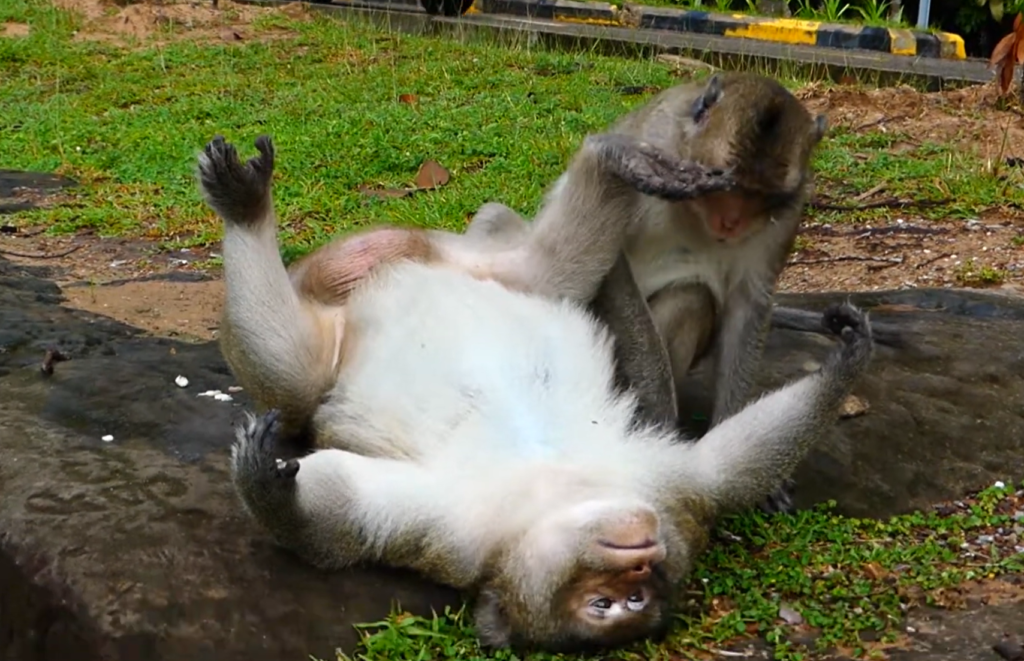
Long before the first visitors arrive at Angkor Wat, Cambodia’s ancient temple complex is already awake.
The morning air is cool and quiet. Golden sunlight slowly reaches across the enormous stone walls, while birds call from the surrounding trees. And somewhere between the ancient ruins, leafy branches, and weathered pathways, another group begins its daily routine—the monkeys of Angkor.
For these wild animals, the magnificent temples are not simply a famous tourist destination. They are part of the landscape they call home.
A Morning Among the Ancient Stones
As the sun rises over the Angkor area, monkeys begin moving through the trees.
Some climb carefully from branch to branch. Others sit quietly on old stone walls, watching the world around them. Young monkeys stay close to their mothers, holding onto their fur as the adults search for food and keep a watchful eye on the group.
A mother may spend several minutes grooming her baby, carefully picking through its fur. Nearby, another monkey may be searching beneath leaves or exploring a tree for something edible.
There is no hurry.
For the monkeys, this is simply another morning.
Visitors who arrive early may catch a glimpse of these ordinary moments—moments that can feel surprisingly special because they happen naturally, without a performance or a planned show.
Families Stay Close
One of the most touching things to observe is the relationship between mothers and their babies.
Young monkeys are curious by nature. They want to climb, explore, jump, and investigate everything around them. But their mothers rarely let them wander too far.
A baby may climb onto a branch while its mother watches from nearby. Sometimes it returns to her arms almost immediately. At other times, it becomes distracted by another monkey or an interesting leaf.
The mother remains nearby, ready to react if necessary.
As the baby grows, it slowly becomes more independent. It learns where to climb, how to move through the trees, how to interact with other members of the troop, and when it is safer to stay close.
These small moments reveal something remarkable: life around Angkor Wat is not frozen in history.
While the temples have survived for centuries, generations of monkeys continue to live their own lives around them.
The Young Ones Bring Energy to the Group
If the adult monkeys are calm and watchful, the babies are usually anything but.
Young monkeys turn almost anything into a game.
A branch becomes a playground. A fallen leaf becomes something to investigate. Another baby becomes a wrestling partner.
They chase one another through the trees, grab branches, tumble onto the ground, and quickly jump back up.
Sometimes their mothers appear to ignore the chaos. But a closer look shows that the adults are constantly paying attention.
The troop has its own social world, with different ages and personalities living together. Older monkeys may rest while younger ones play nearby. Some adults groom one another, strengthening relationships within the group.
To a visitor, it may look like a simple group of monkeys.
But spend a little time watching them, and a much more complicated community begins to appear.
An Ancient Temple, a Living Landscape
Angkor Wat is famous around the world for its architecture and history. Its massive towers, intricate carvings, and enormous stone galleries attract travelers from across the globe.
Yet beyond the famous photographs is another side of Angkor.
Trees grow around the ruins. Birds move through the canopy. Insects fill the air with tiny sounds. And monkeys travel through this ancient landscape as they have become part of the area’s modern natural environment.
There is something almost magical about seeing a monkey sitting quietly against an ancient stone structure.
For a moment, two worlds seem to meet.
One represents the achievements of people from centuries ago.
The other represents nature continuing its everyday story.
The contrast is what makes the experience so memorable.
Life Isn’t Always About Finding Food
A monkey’s day is not simply a constant search for something to eat.
There are also long periods of rest.
During the warmer hours, some monkeys settle into shady branches. Others sit together and groom one another. Babies may sleep against their mothers while the adults remain alert.
These quiet moments are easy to miss.
Tourists often hope to see monkeys climbing, jumping, or doing something dramatic. But sometimes the most beautiful scene is simply a family sitting peacefully together beneath the trees.
The monkey may look completely relaxed, while behind it stands a temple that has witnessed hundreds of years of human history.
Learning to Live Together
For young monkeys, growing up is a process of constant learning.
They watch adults carefully.
They learn which branches are safe. They learn how to move quickly when another monkey approaches. They learn how to communicate with members of their group.
They also learn through play.
A young monkey that appears to be simply jumping around may actually be practicing balance, coordination, and social skills.
Every chase and every climb becomes part of growing up.
Eventually, the playful baby becomes a more confident young monkey capable of navigating the world independently.
And somewhere nearby, another generation begins the same journey.
When the Afternoon Arrives
As the day becomes warmer, the energy of the troop may slow down.
The monkeys search for shaded places and rest among the trees. Some remain close to the temple structures, while others disappear deeper into the surrounding vegetation.
The crowds may come and go, but the monkeys continue their routine.
For them, there is no sightseeing schedule.
There is no perfect photograph.
There is only another day.
And that is perhaps what makes watching them so fascinating.
They are not performing for visitors. They are simply living.
A Different Way to See Angkor Wat
Most people visit Angkor Wat to admire its incredible architecture and learn about Cambodia’s history.
But watching the monkeys adds another dimension to the experience.
It reminds us that historical places can also be living environments.
Stone walls may remain for centuries, but nature continues to change around them.
Trees grow. Birds arrive. Animals move through the landscape. Families are born, grow older, and raise new generations.
The monkeys become part of the story—not because they were carved into the temple walls, but because they are living their own chapter beside them.
The Moment Visitors Remember
Sometimes the most memorable moment isn’t standing directly in front of Angkor Wat’s famous towers.
It might be something much smaller.
A baby monkey carefully climbing onto its mother’s back.
An adult sitting quietly on an ancient stone wall.
Two monkeys grooming each other beneath the shade of a tree.
A playful youngster making a daring jump between branches.
These ordinary moments can become unforgettable because they reveal Angkor Wat from a different perspective.
Not simply as an ancient monument.
But as a place where history and nature continue to exist side by side.
A Story That Continues Every Day
As evening approaches, the sunlight begins to soften.
The temple stones take on a warm glow. The paths become quieter, and the monkeys gradually settle into their evening routines.
Some disappear into the trees.
Others remain close together.
Mothers keep their babies nearby as another day comes to an end.
Tomorrow, the routine will begin again.
The same ancient stones will stand beneath the Cambodian sky. The trees will move gently in the morning breeze. Birds will call from the forest.
And somewhere among the ruins, another group of monkeys will wake up and begin another ordinary day.
For visitors, it may be a remarkable sight.
For the monkeys, it is simply home.
And perhaps that is the most beautiful part of seeing wildlife around Angkor Wat: beneath one of the world’s most famous ancient monuments, life is still happening naturally—one quiet morning, one playful baby, and one family at a time.
You may also like
Baby Monkey Bim Bim Visits the Pool and Opens Surprise Eggs
A popular YouTube clip shows baby monkey Bim Bim at a pool with ducklings and toy trucks. Here's what the…

Mother Monkey Libby Gently Pulls Baby Rainbow’s Ears
Sometimes, the sweetest moments in a monkey family happen during the simplest everyday interactions. Mother monkey Libby and her little…

Mom Libby Welcomes a Visitor to Meet Lily, Leo and Rainbow
Something unexpected happened in Libby’s little monkey family when a new visitor arrived, creating a heartwarming moment that made everyone…