
Mother Libby Acts Firmly Toward Her Young Baby Levi
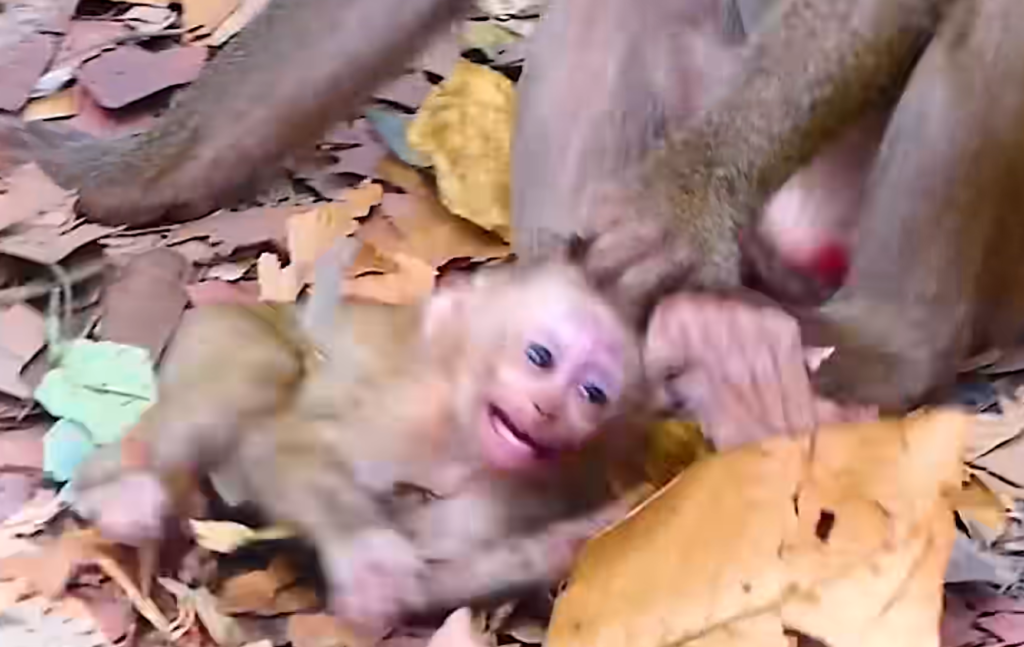
Morning sunlight filtered through the trees as a quiet troop of wild monkeys began another day in their natural forest home. Among them was a caring mother named Libby and her energetic young baby, Levi. Like many young monkeys, Levi was full of curiosity. Every leaf, branch, and sound seemed to invite him to explore.
As Libby searched for food, Levi stayed close behind her. He reached for her fur, hoping for comfort and reassurance, but something about this morning felt different.
Instead of immediately pulling Levi close, Libby gently moved him away several times. Her actions appeared firm, and for a moment, the little monkey seemed confused. Levi paused, looked up at his mother with wide eyes, and softly called out before trying again to stay near her.
From a distance, the scene looked heartbreaking. It might have appeared that Libby was being unusually strict with her baby. But life in the wild often requires mothers to make difficult decisions that help prepare their young for the future.
Levi slowly stepped back and watched as Libby continued searching for food beneath the trees. A few moments later, he cautiously began exploring on his own. He examined small branches, picked up fallen leaves, and carefully practiced climbing a nearby tree while never wandering too far from his mother.
Although Libby seemed focused on finding food, she never truly lost sight of Levi. Every few moments, she glanced in his direction, quietly checking that he remained safe. Her attention suggested that even while encouraging independence, she was still carefully protecting him.
As the day continued, Levi encountered small challenges. He slipped from a low branch, quickly regained his balance, and tried again. Each attempt seemed to build his confidence. Rather than rushing to help with every minor mistake, Libby allowed him the opportunity to learn from experience while remaining nearby if real danger appeared.
The emotional interaction reminded observers that parenting in the animal world is rarely simple. What looks like rejection at first glance can sometimes be part of helping a young animal become stronger and more capable. Wild monkey mothers often balance affection with the need to teach valuable survival skills.
Later in the afternoon, Levi approached Libby once more. This time, she allowed him to sit quietly beside her. He gently rested against her while she calmly groomed his fur. The earlier tension seemed to fade, replaced by a peaceful moment that reflected the strong bond they still shared.
Nearby, other young monkeys played through the trees while adults kept watch over the group. The forest echoed with birdsong and rustling leaves, creating a reminder that every member of the troop had a role in helping the next generation grow.
For anyone fortunate enough to witness this touching encounter, it offered an important lesson. In nature, love is not always expressed through constant comfort. Sometimes it appears through patience, careful guidance, and the courage to let young ones take their first independent steps.
Whether Libby was encouraging Levi to become more confident or simply responding to the demands of life in the wild, their interaction highlighted the remarkable relationship between a mother and her baby. It was a quiet, emotional moment that captured both the challenges and the beauty of growing up in nature.
What do you think? Was Libby’s firm behavior a sign of tough love, or was Levi simply beginning the next stage of becoming an independent young monkey? Share your thoughts in the comments and join the conversation.
You may also like

Mother Monkey Libby Gently Pulls Baby Rainbow’s Ears
Sometimes, the sweetest moments in a monkey family happen during the simplest everyday interactions. Mother monkey Libby and her little…

Mom Libby Welcomes a Visitor to Meet Lily, Leo and Rainbow
Something unexpected happened in Libby’s little monkey family when a new visitor arrived, creating a heartwarming moment that made everyone…

Mom Libby Teaches Baby Leo a Lesson After a Dusty Adventure
Every little monkey has a curious side, and baby Leo is no exception! Under the watchful eyes of his loving…