
Newborn Macaque Clings to Mom Moments After Birth
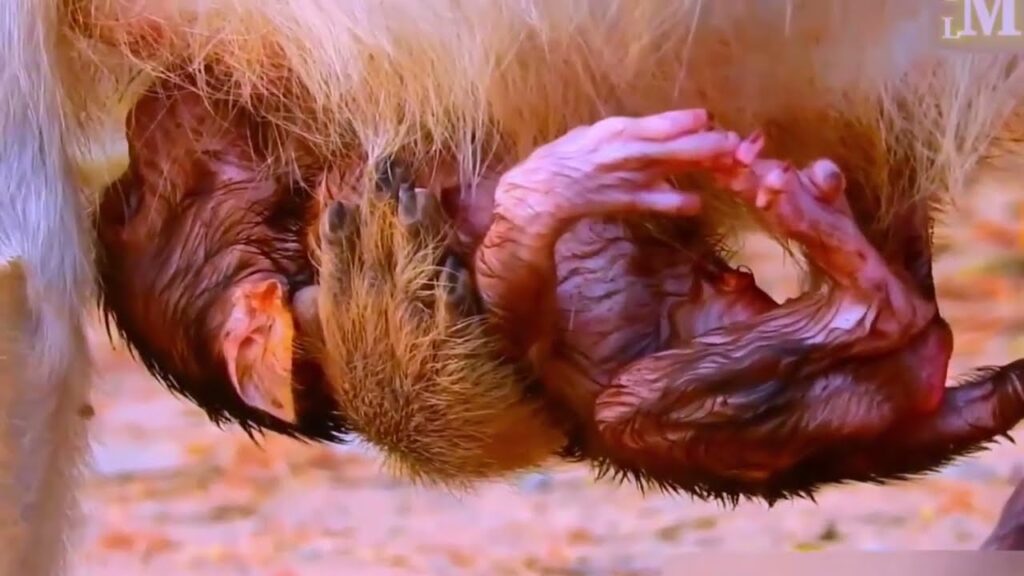
A macaque, only minutes old and still wet from birth, hangs beneath its mother’s belly with its tiny hands pressed together and its eyes barely open. The infant’s skin is dark and creased, its fur still matted, and it clings tight to the pale fur above it as its mother stays still to let it hold on.
This footage follows that newborn through its first stretch of life outside the womb, when it has not yet managed to nurse. The filmmaker catches the raw, close-up reality of a primate birth in the wild — something rarely seen this clearly.
What does a newborn macaque look like right after birth?
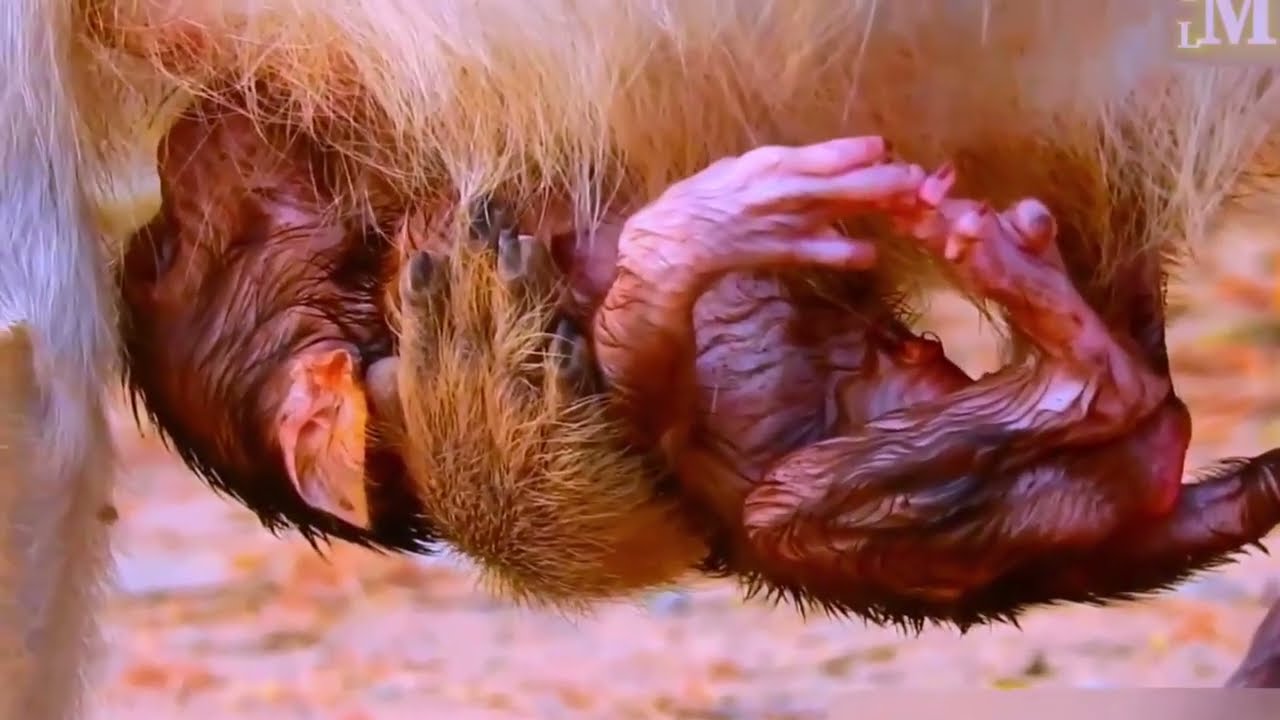
In the earliest shots, the baby’s skin is dark reddish-brown and slick, its tiny fingers curled and searching. Its ears look almost too large for its head, and its fur is still flattened and damp against its small body. This is the look of an infant primate in its very first minutes, before its coat has dried or fluffed out.
The mother’s own fur is pale and thick by comparison, almost cream-colored, and it’s against this backdrop that the newborn’s dark, fragile body stands out so sharply.
Why hasn’t the baby monkey nursed yet?
Later footage shows the mother sitting on a bed of dry leaves in a wooded area, her infant now a little more settled, fur beginning to fluff up around its head and shoulders. She holds something yellow — food she’s eating herself — while trying to guide her baby toward nursing.
The struggle to latch on is a normal part of those first hours for many newborn primates. The mother’s patience shows in how she repositions and steadies the infant against her body, giving it time to find its way.
A close look at a mother’s face
One shot lingers on the mother’s face alone — calm, watchful, her expression steady even as she manages a newborn that isn’t yet feeding. It’s a quiet moment that says as much about the difficulty of those first hours as the footage of the baby itself.
You may also like
A Two-Week-Old Macaque Learns to Move on His Own
A two-week-old macaque wobbles across dirt and leaf litter, pausing on unsteady legs while his mother watches nearby — early…
A Young Mother Macaque Cradles Her Newborn in the Forest
A young mother macaque keeps her newborn tucked close through the forest, its fur still damp and its wide eyes…
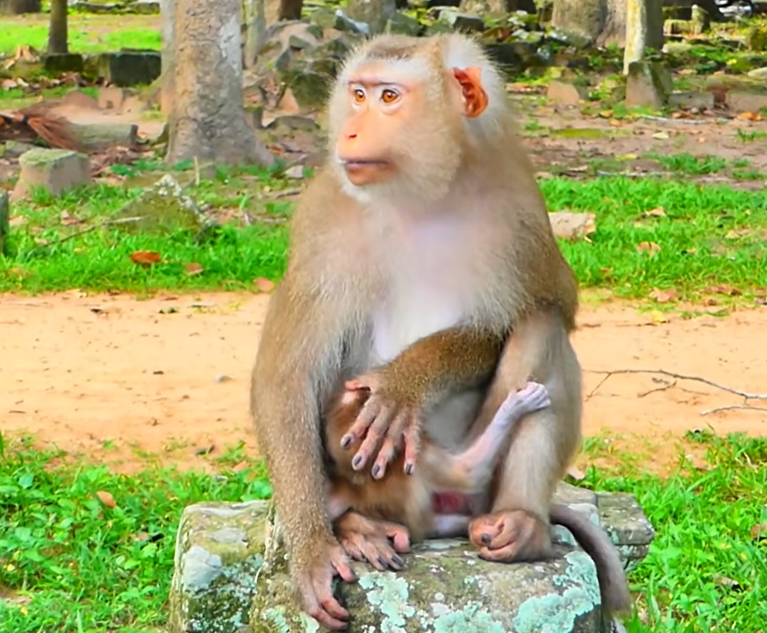
Mother’s Big Hands Gently Hold Her Tiny Baby Monkey
There are some wildlife moments that are impossible to watch without stopping for a second. This is one of those…