
A Mother Macaque Cradles Her Newborn on the Rocks at Bayon
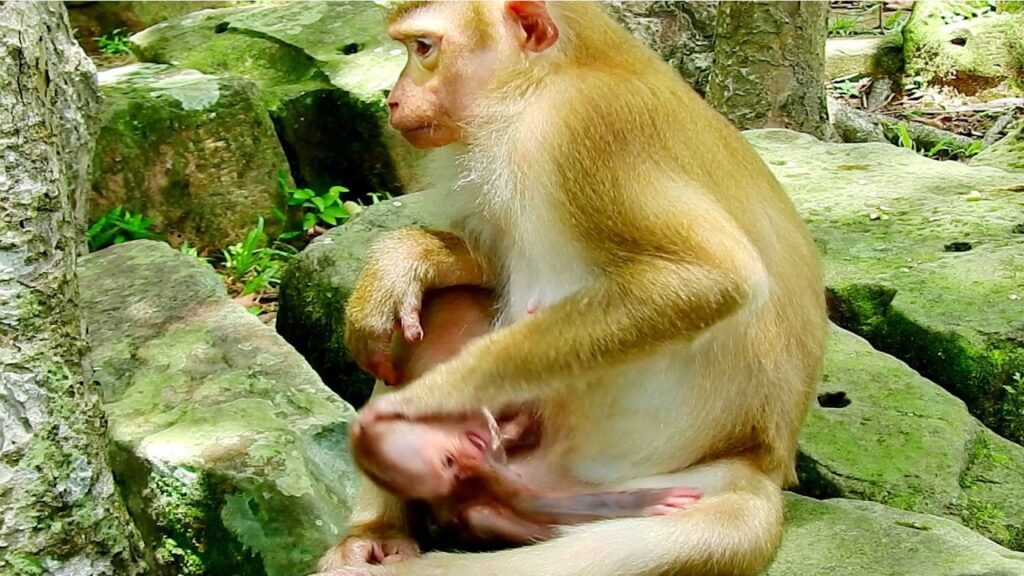
A mother macaque sits still on a bed of moss-covered rocks, curling both arms around a newborn so small it barely reaches past her forearm. The infant’s skin is still pale pink, its eyes barely open, tucked tight against her body as she watches something off to the side with a wary, protective stare.
This footage comes from the Abandon Monkeys project, which follows and cares for a group of monkeys living in the Bayon area, part of the Angkor temple complex in Cambodia. The filmmaker who runs the project feeds and looks after monkeys that have been left without support, and this clip captures a quiet moment between a mother and her baby.
What does the video show?
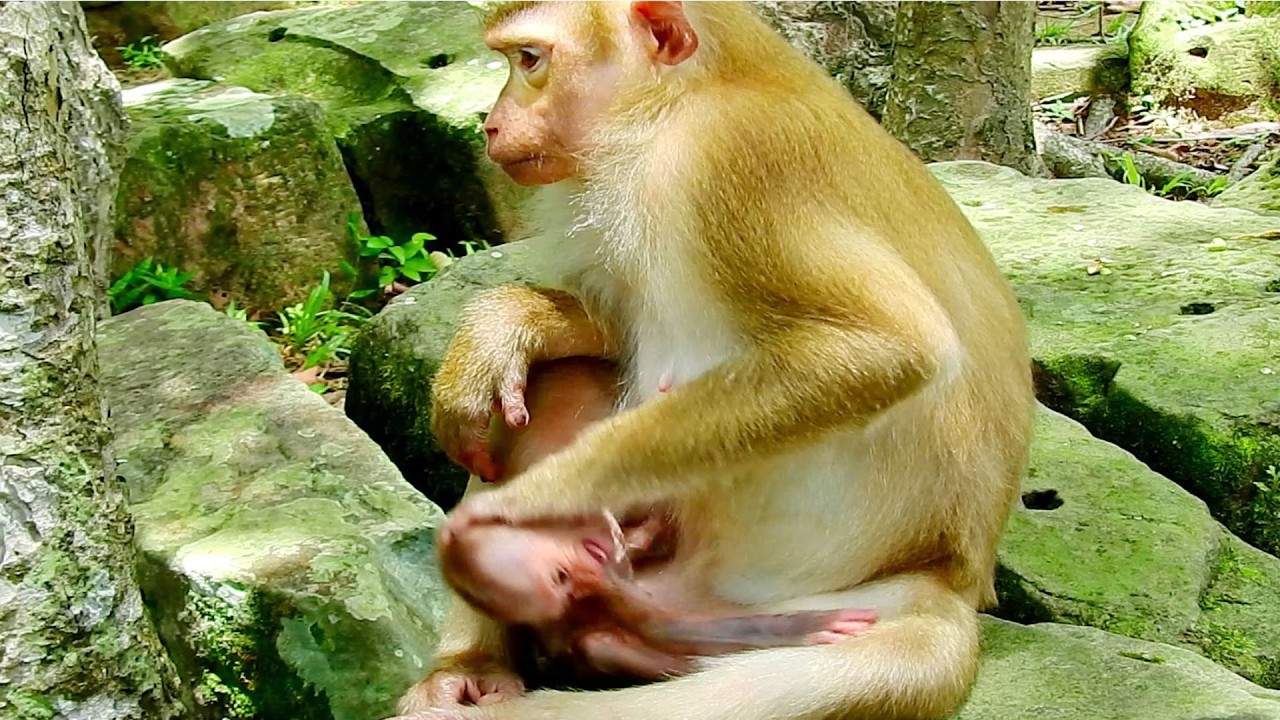
Through most of the footage, the mother stays seated on the rocks, her newborn cradled low against her belly. She shifts position a few times but keeps the infant folded into her arms the whole time, the baby’s tiny hands pressed against her fur. The moss beneath them is thick and green, and old tree trunks stand nearby, suggesting a shaded, well-worn corner of the temple grounds where the group often rests.
Later in the video, the scene shifts. Two young macaques, closer in size to each other than to the newborn seen earlier, sit apart on flat stone slabs in more open, sunlit grass. One glances toward the camera while the other looks off into the distance, both apparently settled and calm.
Why do mother macaques hold infants so closely?
Newborn macaques are unable to move or feed on their own, so mothers keep them clutched against their chest for warmth, safety, and nursing in the earliest days of life. The mother in this footage never sets her infant down, holding it through every shift in posture — a pattern common to young infants across many primate species.
The filmmaker’s notes describe this as part of an ongoing effort to document and support the Bayon monkey group, many of whom have been left to fend for themselves. The quiet scene of mother and newborn offers a small, close look at how that care plays out day to day.
You may also like

Mother Monkey Libby Gently Pulls Baby Rainbow’s Ears
Sometimes, the sweetest moments in a monkey family happen during the simplest everyday interactions. Mother monkey Libby and her little…

Mom Libby Welcomes a Visitor to Meet Lily, Leo and Rainbow
Something unexpected happened in Libby’s little monkey family when a new visitor arrived, creating a heartwarming moment that made everyone…

Mom Libby Teaches Baby Leo a Lesson After a Dusty Adventure
Every little monkey has a curious side, and baby Leo is no exception! Under the watchful eyes of his loving…