
Baby Rainbow and Her Stepmother Libby
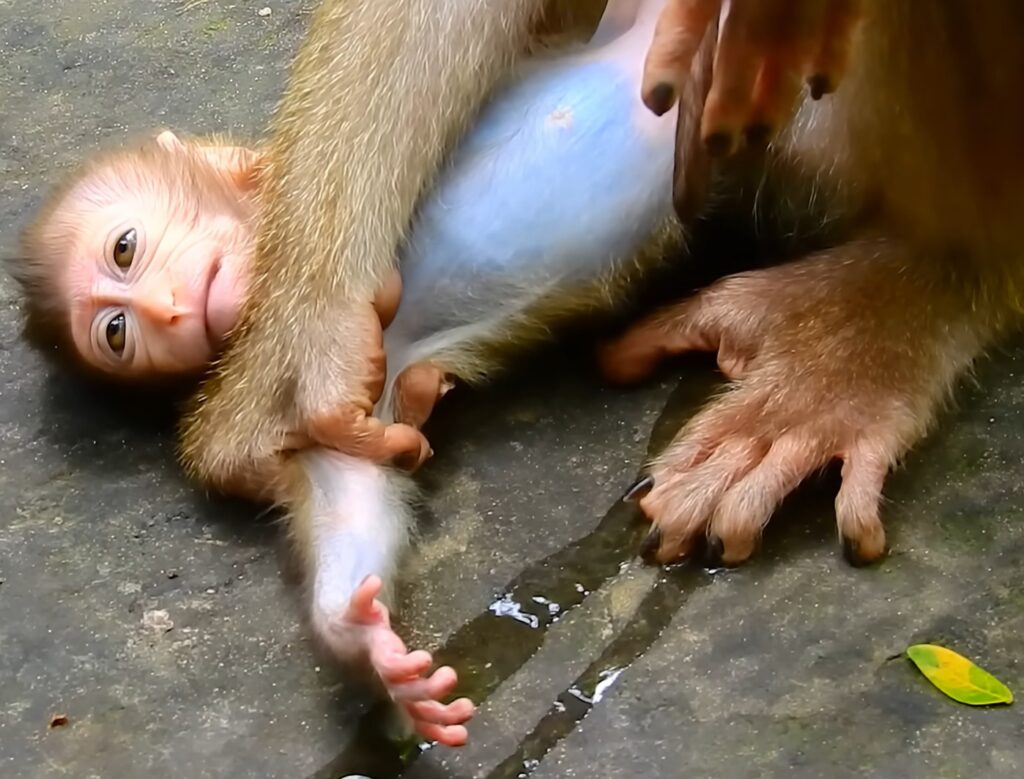
Today’s heartbreaking story follows Tiny Rainbow Monkey, a fragile infant struggling to find safety and comfort under the care of step mother Libby. In a quiet forest setting, observers describe moments that reveal tension, neglect, and confusion, leaving the young monkey visibly distressed. Tiny Rainbow often clings to branches, searching for warmth and reassurance that rarely comes, while Libby appears distant and impatient, focusing attention elsewhere instead of nurturing the vulnerable newborn.
Witnesses recount scenes where feeding is delayed and protective behavior is absent, causing the baby to cry out repeatedly. Each call echoes through the trees, a reminder of the emotional and physical needs that remain unmet. The tiny monkey’s eyes reflect both innocence and uncertainty, highlighting the contrast between natural maternal instincts and the harsh reality it seems to face. Nearby members of the troop occasionally glance over, yet intervention is limited, as social hierarchies and instinctive boundaries govern interactions within the group.
Despite the apparent cruelty, some observers suggest the situation may be driven by stress, competition, or unfamiliar dynamics rather than intentional harm. Still, the outcome for Tiny Rainbow is deeply concerning, as consistent care and protection are essential for survival at such an early stage of life. Moments of vulnerability continue to accumulate, and each passing hour becomes a test of resilience.
As the story spreads online, viewers express empathy, concern, and a desire for better understanding of primate behavior. The viral attention highlights how closely audiences connect with animal welfare narratives, especially when young lives appear at risk. For Tiny Rainbow, the path ahead remains uncertain, but the hope for compassion, stability, and improved care continues to resonate with those following this emotional journey today.
Experts observing such dynamics emphasize the importance of environment, hierarchy, and available resources in shaping behavior among primates. When conditions are strained, even young animals may experience reduced attention and inconsistent caregiving. Continued monitoring, respectful distance, and conservation awareness can help researchers better understand these interactions while ensuring minimal disturbance to the group’s natural patterns over time. Balancing observation and protection remains essential always.
You may also like

A Two-Week-Old Macaque Learns to Move on His Own
A two-week-old macaque wobbles across dirt and leaf litter, pausing on unsteady legs while his mother watches nearby — early…

A Forest Troop Gathers Around a Fallen Baby Macaque
A quiet day of feeding turns somber as a macaque troop gathers in the forest around a baby that did…
Injured Baby Macaques Cling to Mom in the Forest
Raw footage from the forest shows a pair of baby macaques with visible wounds, staying close to their mothers as…