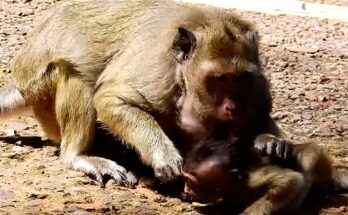
Today, a troubling scene unfolded deep within the peaceful Angkor Forest when a young monkey suddenly began vomiting violently after eating something harmful. What began as a calm morning in the sanctuary quickly shifted into concern as the distressed animal clung to a tree branch, trembling and retching repeatedly. Nearby visitors, who had been enjoying the quiet beauty of the forest, were startled and deeply alarmed by the monkey’s sudden suffering.
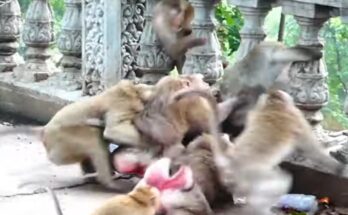
The monkey, known for frequently approaching tourists in search of snacks, had likely eaten something spoiled or contaminated. Moments earlier, witnesses had seen it rummaging through a discarded plastic bag left behind by careless visitors. Within minutes, its playful energy disappeared, replaced by clear distress. As the monkey hunched over, struggling to keep its balance, soft cries echoed through the forest, drawing the attention of both tourists and other monkeys in the troop.
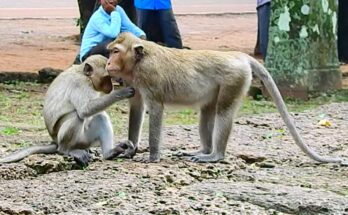
Some bystanders instinctively stepped back, worried and unsure of what was happening, while others attempted to alert local wildlife caretakers. A few compassionate visitors remained close, watching anxiously but maintaining distance so as not to cause additional panic. The troop’s dominant female soon approached, offering gentle reassurance with soft touches and protective gestures, trying to calm the sick monkey as it continued to vomit.
Forest rangers arrived shortly afterward, assessing the situation and preparing to provide basic aid if needed. They suspected the monkey had consumed human food waste or chemical residues often found in litter left by unaware tourists. The incident served as a stark reminder of the dangers wild animals face when human activity disrupts their habitat.
As the young monkey gradually stabilized, the forest seemed to breathe again. Yet the message lingered powerfully: protecting wildlife begins with responsible behavior, respect for nature, and keeping the environment clean for all creatures who call Angkor Forest home.